Adelaide Car Wreckers Explained: How They Work and What They Pay
"Wrecker", "dismantler", "cash for cars" — the words get used interchangeably and it makes the whole industry harder to navigate than it needs to be. Here's exactly what Adelaide car wreckers do, what they'll pay for your vehicle, and how to pick one worth dealing with.
What Is a Car Wrecker, Exactly?
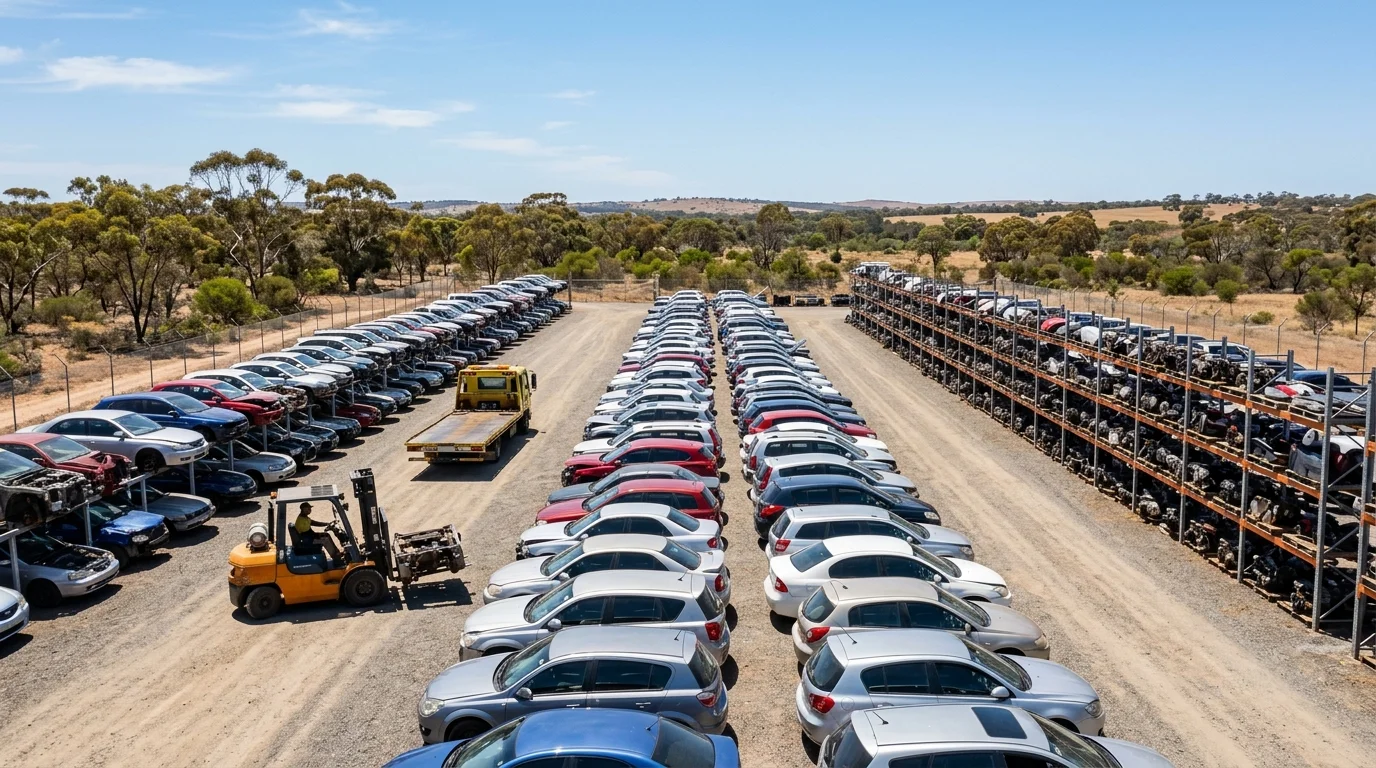
A car wrecker — you'll also hear "auto wrecker", "auto dismantler", "wrecking yard" or "salvage yard" — is a business that buys end-of-life vehicles, strips them for reusable parts, and sends what's left into the metal recycling stream. That's the whole model. They are not scrap metal merchants who only care about tonnage, and they are not used car dealers who need your car to drive. They sit in between.
The confusion most Adelaide owners run into is that "wrecker", "car removal" and "cash for cars" are used almost interchangeably in advertising, when they describe slightly different things. A wrecker is the facility where dismantling happens. A car removal service is the collection arm that brings vehicles to that facility. Many Adelaide operators, including us, do both — which is why the terms blur.
The practical consequence for you is simple. If your car is old, broken, unregistered, written off, or just not worth repairing, a wrecker is almost certainly the buyer who will pay the most for it, because they can monetise the parts as well as the metal. This guide explains how Adelaide wreckers actually operate, what they pay for, how to pick a legitimate one, and what happens to your car after it leaves your driveway.
How Adelaide Wreckers Work — Step by Step
The process from your first phone call to money in your hand is more standardised than most people expect. Here's what actually happens.
Step 1 — Valuation Over the Phone
You call or submit an online form with the year, make, model, condition and location. The buyer checks that model against current parts demand and scrap weight, and quotes you a figure — usually within a few minutes. A good wrecker gives you a firm number at this stage rather than "we'll see when we get there".
Step 2 — Booking a Collection
If you accept, a pickup slot is booked. Across the Adelaide metropolitan area this is often the same day, and rarely more than 48 hours out. You'll be asked to have proof of ownership and photo ID ready, and to remove personal belongings.
Step 3 — Collection and Payment
A tow truck arrives, the driver confirms the vehicle matches your description, you sign the transfer paperwork, and you're paid on the spot — cash or instant bank transfer. Towing is included at no charge with any legitimate operator. The whole visit usually takes fifteen to twenty minutes.
Step 4 — Depollution and Dismantling
Back at the yard, the vehicle is drained of all fluids, the battery and gas are removed, and reusable parts are pulled, tested and catalogued. The remaining shell is baled and sent to a shredder. This is the part you never see, but it's what funds the offer you were paid.
What Wreckers Actually Pay For
Understanding what a wrecker is buying makes their offers far less mysterious — and helps you tell a serious quote from a lowball one.
Reusable Parts
This is the largest slice of value in most vehicles. Panels, doors, lights, mirrors, seats, engines, gearboxes, diffs, alternators, starters and ECUs all have a resale market. Common Australian models — Commodore, Falcon, Hilux, Ranger, Camry, Corolla — have the deepest parts demand in Adelaide, which is why they consistently attract better offers than obscure imports of the same weight.
Precious and Non-Ferrous Metals
The catalytic converter contains platinum, palladium and rhodium and is the single most valuable small component on most cars. Aluminium — wheels, cylinder heads, some engine blocks — is worth several times the price of steel per tonne. Copper in the wiring loom adds a little more.
Ferrous Scrap
The steel body and chassis set the floor price. It's the least valuable component per kilogram but the largest by mass, which is why a heavy 4WD in poor condition can still beat a light hatchback in good condition.
Tyres, Glass and Fluids
These are cost centres, not revenue. A responsible wrecker pays to dispose of them properly — tyres through the national scheme run by Tyre Stewardship Australia, fluids through licensed waste handlers. Operators who quote suspiciously high offers sometimes plan to avoid these costs entirely, which should worry you.
Wrecker vs. Private Sale vs. Dealer Trade-In
For a vehicle at the end of its life, there are really only three exits. This table compares them honestly, including where a wrecker is not the best answer.
| Feature | Adelaide Wrecker | Private Sale / Dealer Trade-In |
|---|---|---|
| Accepts non-running cars | Yes, as standard | Rarely — usually refused outright |
| Registration required | No | Effectively yes for a private sale |
| Time to sell | Same day to 48 hours | Weeks, sometimes months |
| Transport | Free towing included | You deliver it, or pay a tow |
| Best for | End-of-life, damaged, unregistered vehicles | Roadworthy cars with real resale value |
| Payment | On the spot | Varies; trade-in is credit, not cash |
The honest rule of thumb: if your car still passes a roadworthy inspection and someone would realistically want to drive it, sell it privately — you'll do better. The moment repairs cost more than the car is worth, that logic inverts and a wrecker becomes the highest bidder in the market. If you're unsure which side of that line you're on, our scrap car value guide for Adelaide walks through the numbers by vehicle type.
Find Out What Your Car Is Worth
Tell us the year, make, model and condition and we'll give you a firm wrecking offer in minutes — no obligation, free collection anywhere in Adelaide.
Call 0431 463 481 Get Online QuoteHow to Tell a Licensed Wrecker From a Backyard Operator
Adelaide has plenty of genuine, long-established wreckers. It also has operators who work out of a phone number and a borrowed truck. The difference matters, because you remain connected to that vehicle until the transfer is properly recorded.
Check for a Registered Business and ABN
A legitimate wrecker trades under a registered business name with a valid ABN and can tell you where its yard is. Consumer & Business Services SA publishes guidance on dealing with traders and second-hand vehicle dealers — worth two minutes of reading before you hand anything over.
Ask About Environmental Licensing
Dismantling produces oil, coolant, fuel and refrigerant that must be handled under SA EPA requirements. A real operator will answer that question comfortably. One who deflects is likely draining fluids onto dirt somewhere, and that is not a business you want your vehicle traced back to.
Insist on a Firm Quote
The classic bait-and-switch is a generous phone quote followed by a much lower "revised" offer once the truck is in your driveway and the car is already on the tilt tray. A firm quote, confirmed in writing or by SMS, removes that leverage entirely.
Confirm the Paperwork Is Handled
You need a completed disposal or transfer notice so the vehicle is no longer your responsibility. Any wrecker who says paperwork "doesn't matter for a car this old" is telling you something important about how they operate.
Wrecking and Collection Across Adelaide
Most Adelaide wreckers cluster in the northern and western industrial belts — Cavan, Wingfield, Regency Park, Gepps Cross — simply because that's where the industrial land and the metal recyclers are. That doesn't mean you need to live nearby, because collection comes to you.
Inner-city owners in the Adelaide CBD and North Adelaide usually have the tightest access constraints — apartment car parks, laneways, permit parking — and that's worth mentioning when you book so the right truck is sent. Northern suburbs pickups around Elizabeth, Salisbury and Golden Grove are the shortest runs to most yards, so same-day collection is very common there.
Out west, Port Adelaide and West Lakes sit right on the doorstep of the main dismantling precinct. Southern and coastal owners around Marion, Morphett Vale and Hallett Cove are a longer drive, but any established operator covers them without charging for the distance. If your car is unregistered and cannot legally be driven anywhere, our unregistered car removal service covers the entire metropolitan area regardless of suburb.
Five Ways to Get More From an Adelaide Wrecker
1. Ring Three Yards, Not One
Parts demand differs between yards. A wrecker who has just sold their last Ranger tailgate will pay more for a Ranger than one with four in stock. Fifteen minutes of calls routinely moves the offer by a few hundred dollars.
2. Be Precise About the Model Variant
"2012 Hilux" is worth less than "2012 Hilux SR5 dual cab 3.0 diesel, auto". Variant, drivetrain and trim level all change parts value, and a vague description always gets a conservative quote.
3. Leave the Car Complete
Pulling the battery, the wheels or the stereo before collection almost always costs you more than you gain. Wreckers price the whole vehicle and discount hard for anything missing.
4. Mention Anything Genuinely Valuable
Aftermarket alloys, a bullbar, a tow bar, a canopy, a recent engine or gearbox rebuild, near-new tyres — these are real money to a dismantler, and they will not be assumed. Say so up front.
5. Don't Wait Years
A car deteriorates fastest once it stops being driven: seals dry out, the interior fades, rust takes hold, and rodents get into the loom. The Green Vehicle Guide illustrates how quickly older vehicles fall behind on emissions and efficiency, and parts demand fades along the same curve. The car sitting on your lawn is worth more today than next winter.
Where Your Car Ends Up
Australia sends well over half a million vehicles to end-of-life each year, and roughly three quarters of each one by weight is recovered rather than buried. That figure is the entire reason wreckers can pay you instead of charging you.
Depollution comes first — fuel, oils, coolant, brake and transmission fluid, refrigerant and the battery are captured and sent to licensed handlers. Airbags are made safe. Then parts recovery: anything with resale life is removed, tested, photographed and listed, and it goes on to keep another Adelaide car on the road, usually at a fraction of the price of a new component.
What remains is a stripped shell of mostly steel. It's flattened, baled and shredded, and the steel re-enters Australian manufacturing. Tyres go into the national recovery stream; glass and plastics are separated where there's a viable market for them. Our car recycling service and our scrap car buying service both run through this same regulated chain.
The upshot is that using a licensed wrecker isn't just the option that pays best — it's the only option that reliably keeps oil out of stormwater and a tonne of steel out of landfill. That's a better outcome than the car quietly rusting behind the shed for another decade.
Frequently Asked Questions
What is the difference between a car wrecker and a car removal service?
A wrecker is the yard where vehicles are dismantled for parts and recycled; a car removal service is the collection arm that tows vehicles to that yard. Most Adelaide operators, including us, do both — so in practice the terms are used interchangeably.
Do Adelaide wreckers buy cars that don't run?
Yes. Non-running vehicles are core business for wreckers, because value comes from recoverable parts and metal rather than drivability. A complete non-runner often attracts a better offer than a partly stripped car that still starts.
Do I need registration to sell my car to a wrecker in Adelaide?
No. Wreckers buy unregistered, expired-rego and written-off vehicles every day. You do need proof of ownership and photo ID so the transfer paperwork can be completed properly.
How much do Adelaide wreckers pay for a car?
Typically $150 to $2,000 for a standard passenger car, and up to $9,000 or more for heavier 4WDs, utes and light trucks. The figure depends on kerb weight, parts demand for your model, and how complete the vehicle is.
How do I know an Adelaide wrecker is licensed?
A legitimate wrecker trades under a registered business name with a valid ABN, can tell you where its yard is, handles fluids and waste under SA EPA requirements, and completes the transfer paperwork with you at collection.